
Storing Soil-biodegradable Plastic Mulch On-Farm
Storing soil-biodegradable plastic mulch at your farm requires a little more planning than storing polyethylene mulch. Order only as much mulch as needed for a given year, and, if rolls are left over, these should be used first the following year. The following guidelines will keep soil-biodegradable mulch in good condition for one year, but after that time, it may lose its quality.
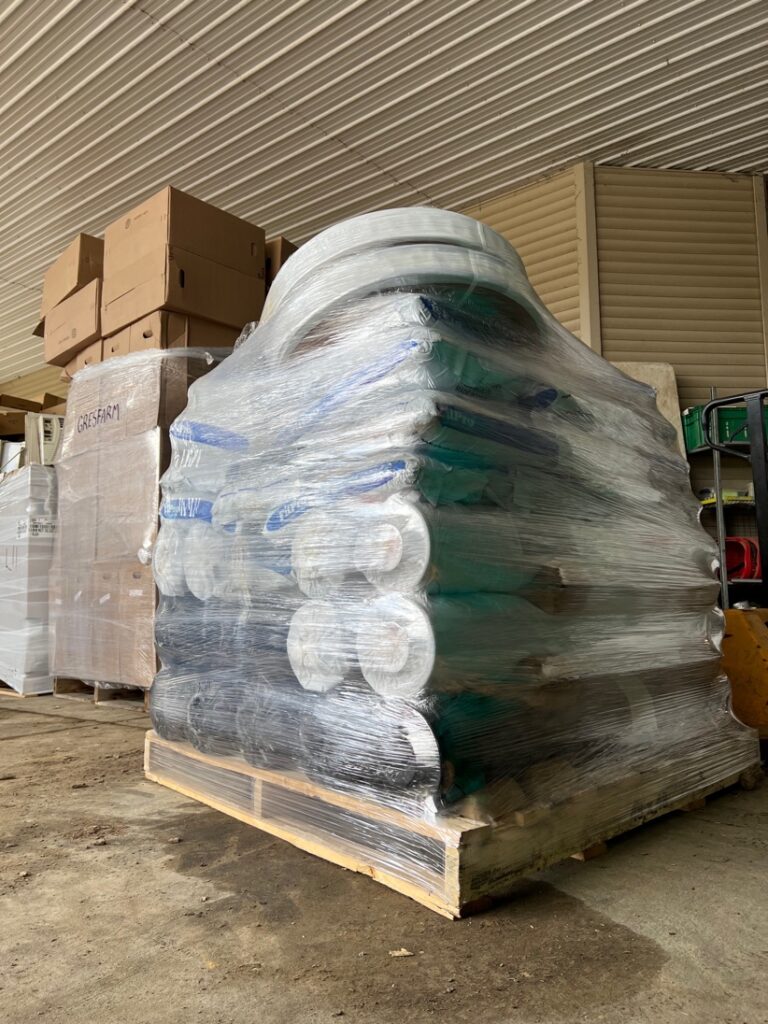
- Store rolls in their original packaging. If packaging has been discarded, wrap rolls in polyethylene or moisture-controlled overwrap.
- Store mulch indoors, in a dark or shaded space with no direct exposure to sun or heat sources. A farm warehouse or supply shed that is climate controlled is ideal.
- Prevent temperature extremes, 65-80 °F is a good range.
- Store in a dry place with low to moderate relative humidity. If too humid, moisture can condense on the mulch.
- Store the rolls horizontally to reduce the risk of deformation. This also makes it easier to unroll the mulch when it is time to use it.
- If not in the original packaging, do not stack rolls, store in a single layer.
- Control rodents or other pests that might damage the rolls.
- Before laying the mulch, discard a few outer layers if it has cracks and rips due to storage, transport or handling, as the damaged mulch will have reduced performance in the field.
- For more information, refer to the user manual for your mulch.
This material is based upon work that is supported by USDA SCRI award 2022-51181-38325 and WSARE award 2019-51181-30012. Additional support was provided by the National Institute of Food and Agriculture Hatch project 1017286. Any opinions, findings, conclusions, or recommendations expressed in this publication are those of the author(s) and should not be construed to represent any official USDA or U.S. Government determination or policy.

WSU Extension programs and employment are available to all without discrimination. Evidence of noncompliance may be reported through your local WSU Extension Office.