
Mechanically laying biodegradable plastic mulch
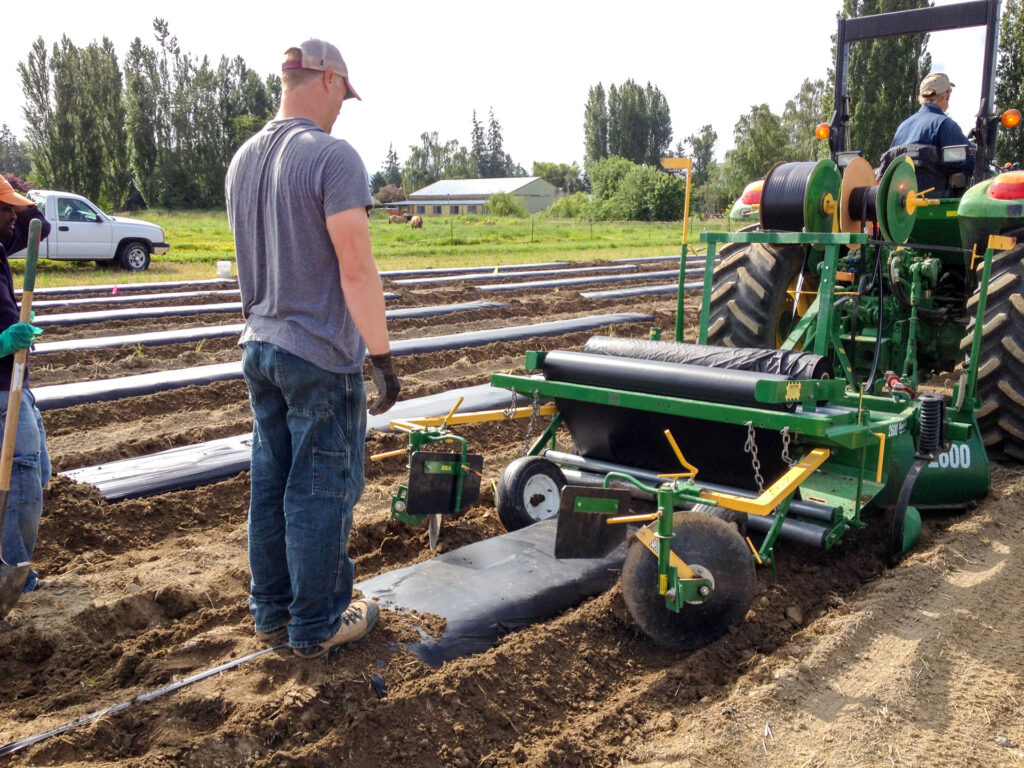
Farmers lay mulch in the field right before seeding or planting (Figure 1) to control weeds, conserve soil moisture and get several other benefits during the crop growing season. Biodegradable mulch can be laid mechanically with the same mulch laying equipment that is used to lay polyethylene (PE) mulch, but some minor adjustments are needed.
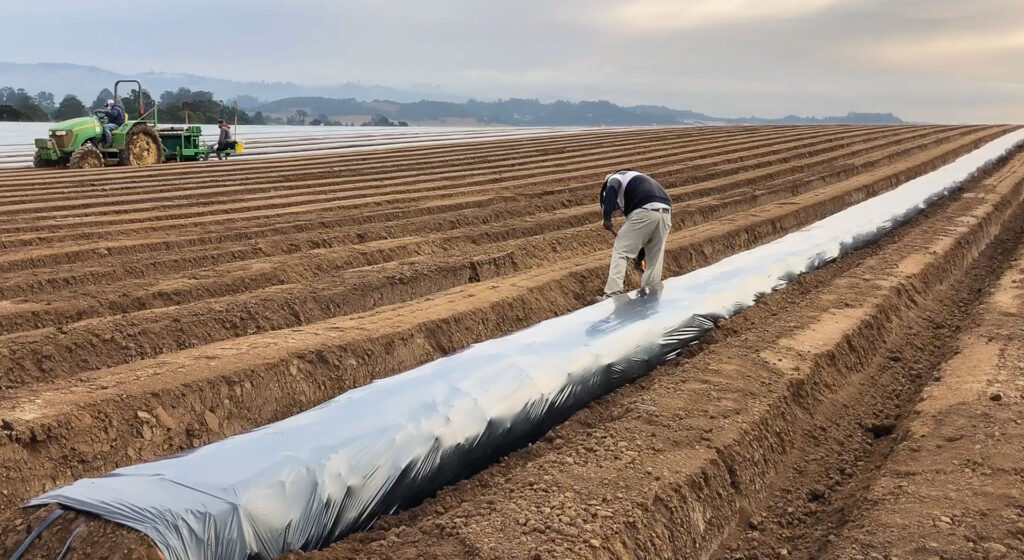
Laying biodegradable mulch by machine
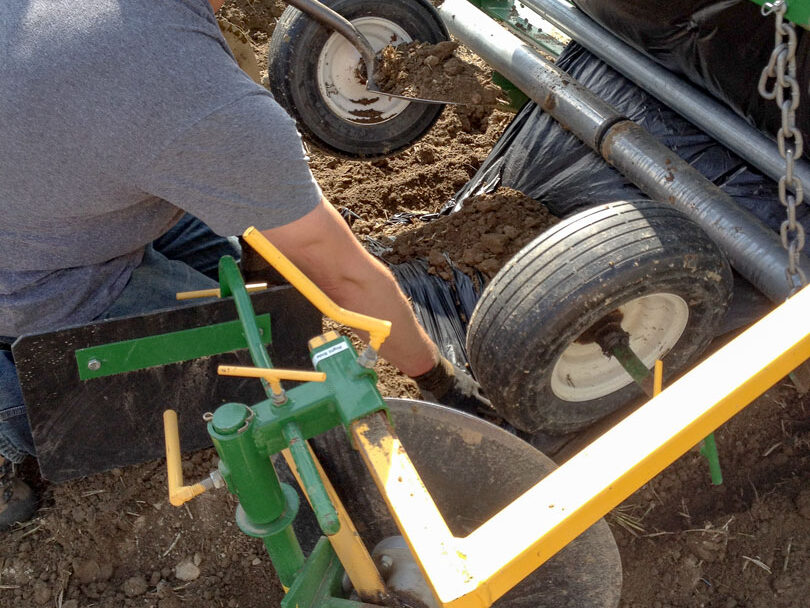
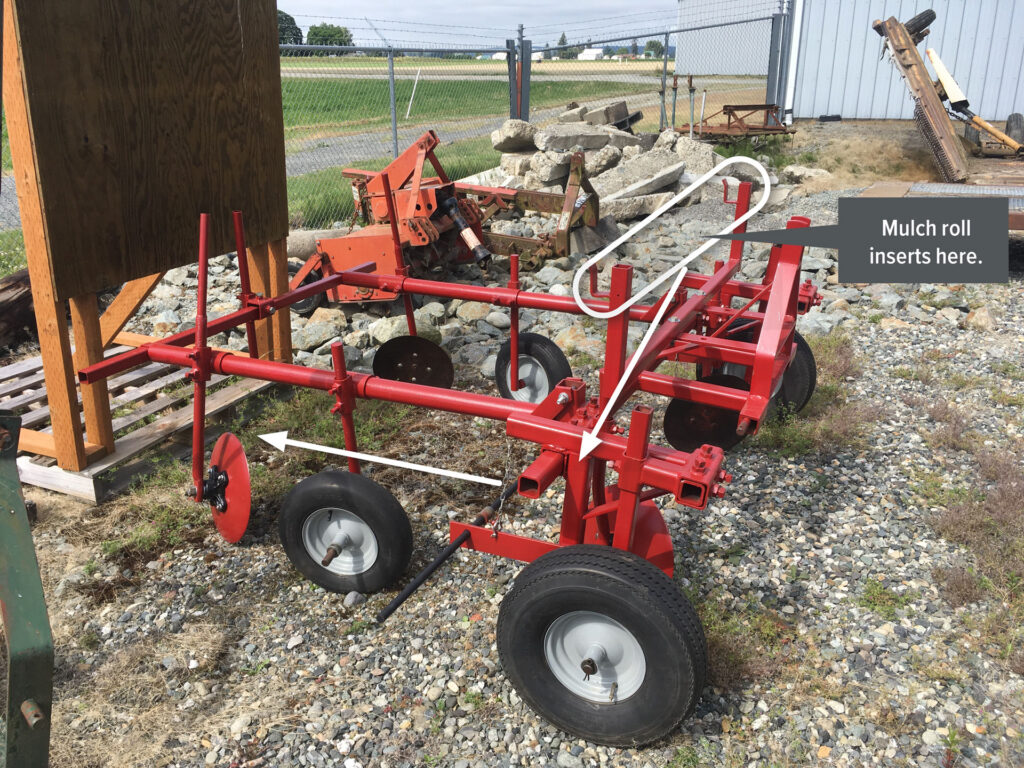
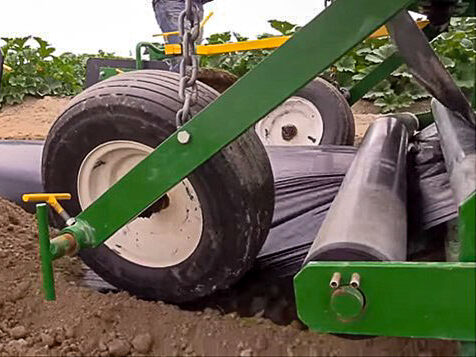
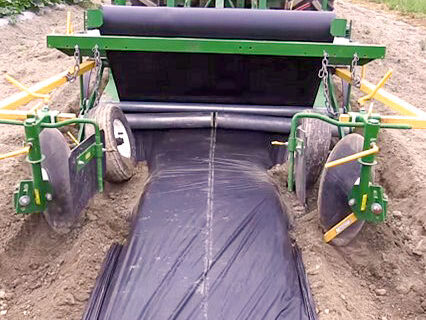
Plastic mulch layers form raised beds that are 5 to 9 inches in height, and they lay drip tape and plastic mulch in one pass. For newer mulch layers, feed the mulch through the roller bars (Figure 2A) and pull the mulch out so that it passes under the guide wheels. Roller bars should move freely so as not to put tension on the mulch. For older mulch layers, the rod that holds the mulch in place (Figure 2B) should allow the mulch to roll freely. The wheels of the mulch layer should rest lightly on the mulch or float just above the mulch so as to guide the mulch into the furrows that are opened up by the mulch layer but such that the wheels do not apply pressure to the mulch (Figure 3A). With a shovel, throw soil on the mulch where it passes under the wheels or step on the mulch to hold the mulch in place once the tractor starts moving forward (Figure 3B). The mulch should be slightly loose on the bed when it is laid (Figure 3C). Avoid stretching the mulch too tightly when laying as this will cause it to rip. As the mulch moistens and dries, it will become tighter.
This material is based upon work that is supported by USDA SCRI award 2022-51181-38325 and WSARE award 2019-51181-30012. Additional support was provided by the National Institute of Food and Agriculture Hatch project 1017286. Any opinions, findings, conclusions, or recommendations expressed in this publication are those of the author(s) and should not be construed to represent any official USDA or U.S. Government determination or policy.

WSU Extension programs and employment are available to all without discrimination. Evidence of noncompliance may be reported through your local WSU Extension Office.