Soil Fumigation Compatibility with Soil-Biodegradable Plastic Mulch and Tarp Recycling
Summary
Soil-biodegradable mulches (BDMs) may be legally used during chemical soil fumigation. However, BDMs can only be applied after the fumigant’s REI has expired; or BDMs may be applied during fumigation but do not qualify for buffer zone reduction credits (i.e., similar to an untarped fumigation). BDM use in conjunction with fumigation is further limited by the lack of information regarding the performance of BDMs in fumigated systems. BDMs should not be recycled as they can contaminate recyclate. Information on the recyclability of non-biodegradable fumigation tarps is limited.
Soil-Biodegradable Mulches and Fumigation
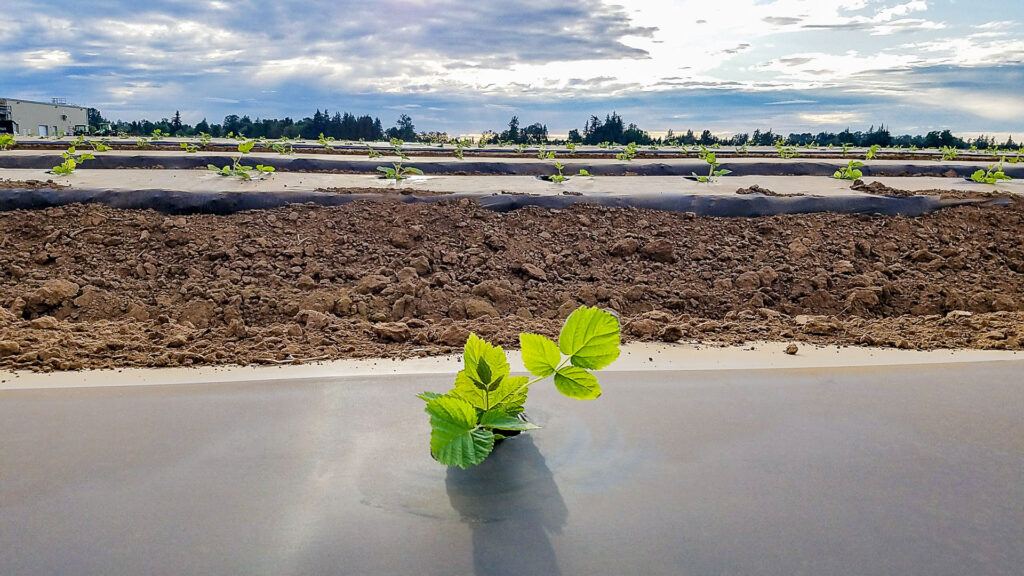
Soil-biodegradable plastic mulches (BDMs; Fig. 1) are an alternative to traditional polyethylene (PE) mulch films and are designed to biodegrade in soil to carbon dioxide and microbial biomass through the metabolism of naturally occurring soil microorganisms. BDMs are increasingly being adopted in commercial crop production systems because they may be a more sustainable alternative than traditional PE mulch films, which have limited disposal options. However, many crop production systems undergo pre-plant soil fumigation for disease, nematode, and weed management.
Soil fumigation in conjunction with BDM application is a pending new practice with little research to guide practices for optimal fumigation efficacy and BDM performance. BDMs may be legally used during chemical soil fumigation, but use is limited and there is little information regarding the performance of BDMs in fumigated systems.
Soil Fumigants
Traditional chemical soil fumigants include 1,3-dichloropropene (1,3-D), chloropicrin, metam sodium, and metam potassium. Biofumigation and anerobic soil disinfestation (ASD) are two alternatives to traditional soil fumigation, which increasingly are being explored in organic systems.
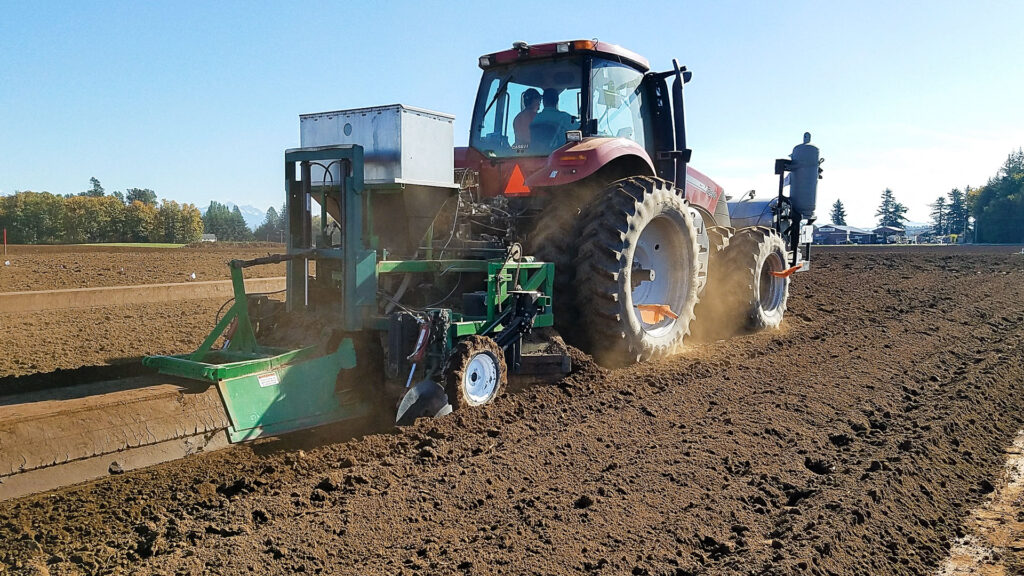
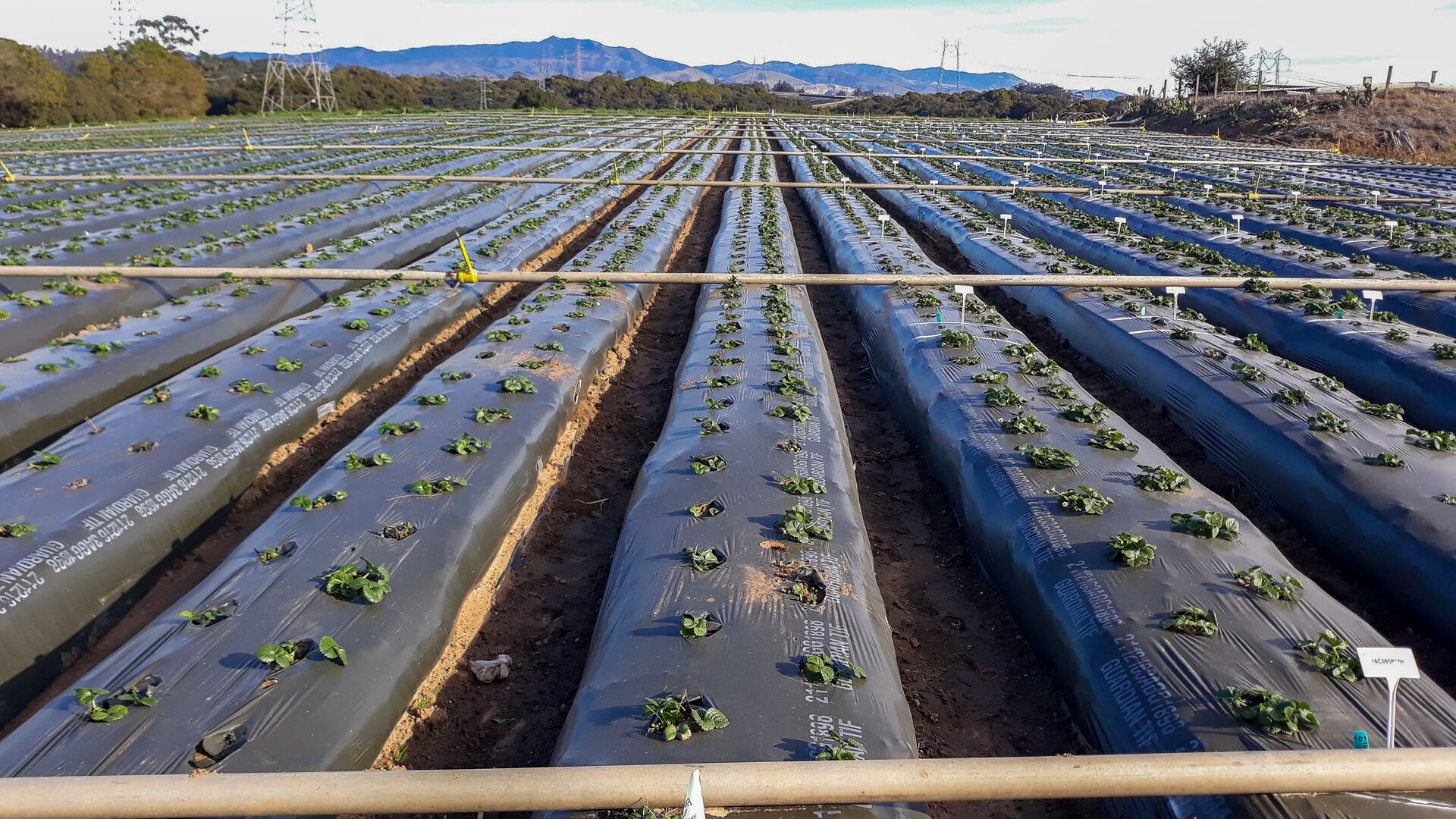
High-barrier tarps, namely totally and virtually impermeable films (TIF and VIF, respectively), that are non-biodegradable are commonly used during chemical soil fumigation to improve fumigation efficacy (Figs. 2-3). The use of tarps can reduce buffer zones around the perimeter of a fumigated field, which can be important at field sites near inhabited structures. The Environmental Protection Agency has a list of tarps tested for permeability of fumigant active ingredients and that qualify for buffer zone reduction credits. BDMs are not on this list. Thus, the current interpretation for applicators and handlers to be legally consistent with fumigant labels is:
- BDMs can only be applied after the fumigant’s REI has expired; or
- BDMs may be applied during fumigation but do not qualify for buffer zone reduction credits (i.e., similar to an untarped fumigation)
Research is underway to characterize the permeability of BDMs to soil fumigants. Concern has been expressed regarding the interaction between BDMs and soil fumigants, which may decrease mulch performance. Additionally, there is concern that fumigation may alter the soil microbial community involved in BDM degradation. These questions are currently being explored so growers can have information to base their decisions on when it comes to BDM application and soil fumigation.
Recycling of Non-Biodegradable Tarps Exposed to Fumigants
Questions have been raised about the recyclability of non-biodegradable tarps used for fumigation. Currently, there are no recommendations to guide whether or not tarps and mulch films exposed to soil fumigants should be recycled and what their recycling outcomes are.
Note that BDMs and bioplastics have plastic compositions different from non-biodegradable plastic and should be kept separate and not enter the recycling stream as they can contaminate recyclate.
This material is based upon work that is supported by USDA SCRI award 2022-51181-38325 and WSARE award 2019-51181-30012. Additional support was provided by the National Institute of Food and Agriculture Hatch project 1017286. Any opinions, findings, conclusions, or recommendations expressed in this publication are those of the author(s) and should not be construed to represent any official USDA or U.S. Government determination or policy.

WSU Extension programs and employment are available to all without discrimination. Evidence of noncompliance may be reported through your local WSU Extension Office.