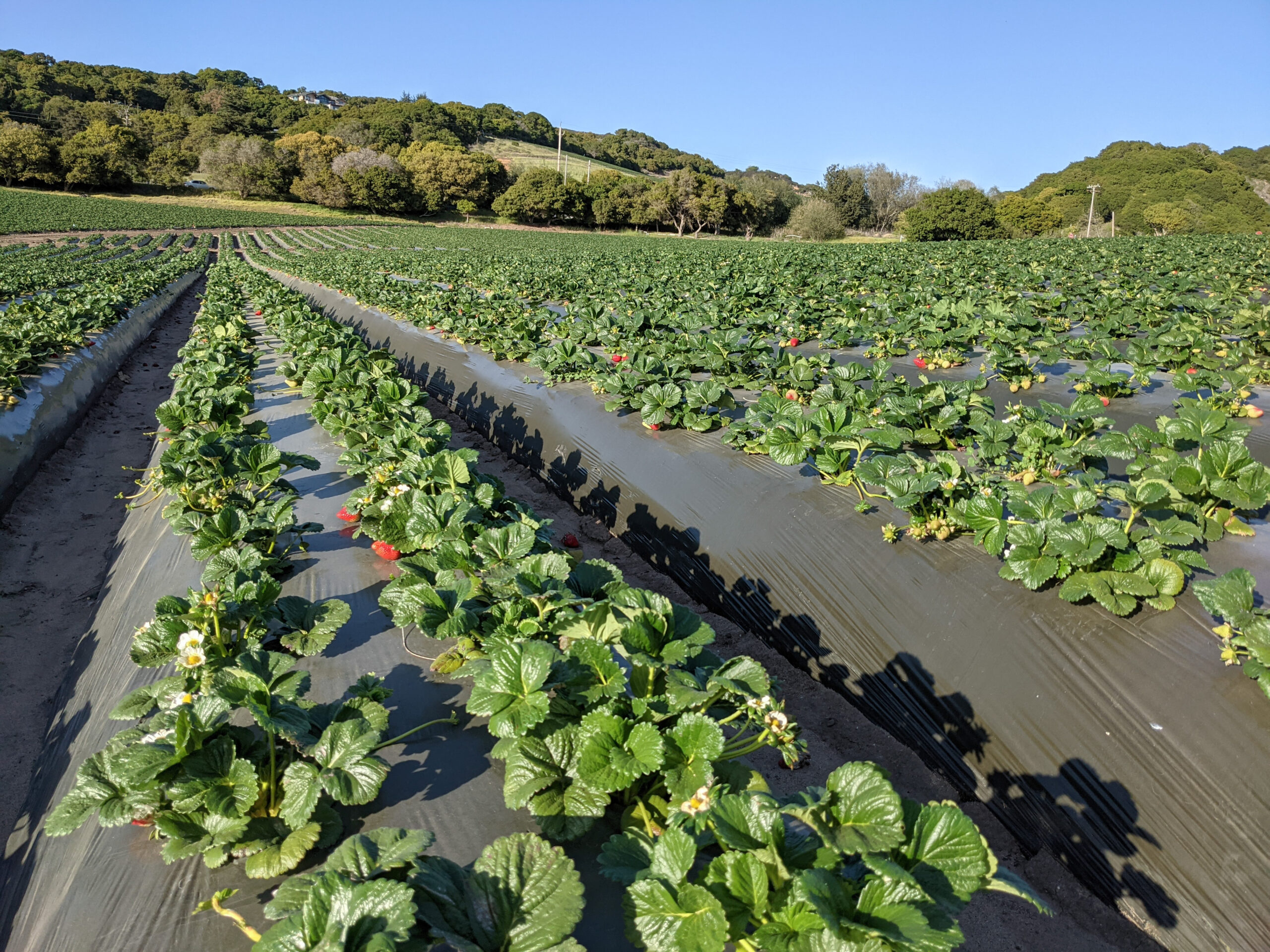
Plastic Mulches
Introduction
Plastic (polyethylene) mulch has been used as a tool in agriculture since the 1950s, to reduce weed competition, control water loss, raise soil temperature, increase yield, improve crop quality, and shorten harvest time. U.S. agriculture uses about 1 billion pounds of plastic mulch per year, and because recycling of agricultural plastic is not available in most regions, the disposal option that most growers choose is the landfill.
Soil-biodegradable plastic mulch (BDM) has been developed as an environmentally friendly alternative to polyethylene (PE) mulch. At Washington State University, we are testing BDM to find effective and affordable alternatives to polyethylene mulch to reduce non-recyclable plastic waste. In addition, we are exploring improved end-of-life management strategies for PE mulch waste.
Our BDM research began in 2003 when we started working with companies to field test their BDMs. Our research projects to date include:
Find us on social media
PODCAST ON LIBSYN